Tag: Manufacturing Process

  • How Circular Knitting Works: The Seamless Secret Behind Your Favourite Knits

    How Circular Knitting Works: The Seamless Secret Behind Your Favourite Knits

    Welcome back to Knitted Fabric.in! We’ve talked a lot about different types of knitted fabrics, their unique qualities, and how they’re finished. But have you ever wondered how many of your everyday knitwear items – from T-shirts and innerwear to socks and activewear – are made in a continuous, seamless tube? The answer lies in a fascinating process called circular knitting.

    Understanding the machinery behind the fabrics you love is incredibly insightful. Let’s pull back the curtain and explore the ingenious world of circular knitting.


    What is Circular Knitting?

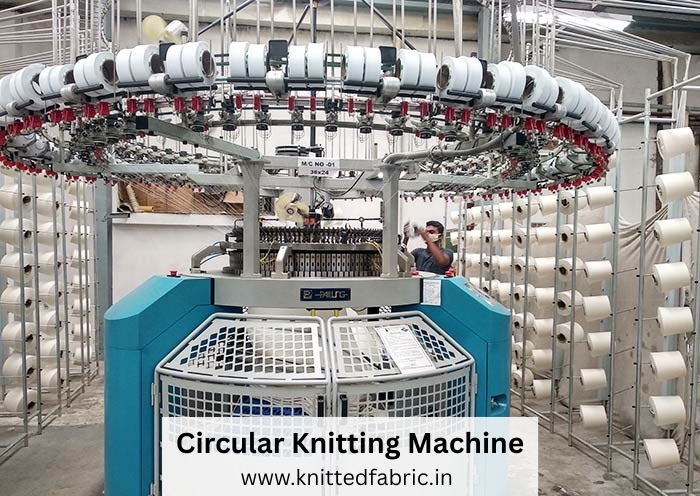
    At its simplest, circular knitting is a method of knitting fabric in a continuous, tubular form, without any seams. Unlike flatbed knitting machines that produce flat pieces of fabric (which then need to be cut and sewn together), circular knitting machines create a seamless “tube” of fabric, much like knitting a long sock or a continuous sleeve on large, round needles.

    This technique is incredibly efficient and is the backbone of mass production for many knitted garments worldwide, including a significant portion of the knitwear produced in India.

    Circular Knitting Machine diagram

    The Core Components of a Circular Knitting Machine

    To understand how it works, let’s look at the main parts of a typical circular knitting machine:

    1. Needle Cylinder: This is the heart of the machine. It’s a rotating cylinder (or sometimes a rotating cam box with stationary needles) that holds a large number of knitting needles arranged in a perfect circle.
    2. Needles: These are specialized latch needles (most common) or sometimes compound needles. Each needle moves independently up and down within its slot in the cylinder.
    3. Cams: These are stationary metal tracks that guide the needles’ movement. As the needle cylinder rotates, the needles ride up and down these cam tracks, performing the actions required to form loops.
    4. Yarn Feeders: These are mechanisms that supply yarn to the needles as they knit. A circular knitting machine can have multiple yarn feeders, allowing several courses (rows) of knitting to be formed simultaneously, dramatically increasing production speed.
    5. Sinkers: Small metal elements located between the needles. They assist in holding down the fabric loops as new loops are formed, ensuring consistent stitch formation.
    6. Fabric Take-down: Located below the knitting area, this system (usually rollers) gently pulls the newly formed fabric tube downwards, preventing it from bunching up and maintaining proper tension.

    How the Magic Happens: The Step-by-Step Process

    The process of circular knitting is a continuous dance of needles and yarn, forming loops one after another:

    1. Yarn Feeding: Yarn from cones is fed through tension guides to the yarn feeders, which present the yarn to the needles.
    2. Needle Movement – Raising: As the needle cylinder rotates, the cam tracks guide individual needles upwards. The hook of each needle rises above the old loop it’s holding, and the latch (a small movable part on the needle) opens up.
    3. Yarn Laying: The yarn feeder lays a new segment of yarn into the open hook of the raised needle.
    4. Needle Movement – Drawing Down: The cam then guides the needle downwards. As it descends, the old loop (which was held by the latch) slides up the needle stem and pushes the latch closed.
    5. Loop Formation: The newly laid yarn is pulled through the old loop. As the needle continues its downward movement, the old loop casts off, and the new loop is held securely by the needle’s hook.
    6. Fabric Take-down: The newly formed row of interlocked loops (a “course”) adds to the fabric tube, which is then gently pulled downwards by the take-down rollers.

    This entire sequence happens at incredible speeds, with hundreds or even thousands of needles working simultaneously to produce a seamless fabric tube. Because there are multiple yarn feeders around the circumference, several rows of knitting are being formed at any given moment, leading to very high production rates.


    Types of Circular Knitting Machines

    Circular knitting machines come in various configurations, each suited for different types of fabrics:

    • Single Jersey Machines: These machines have one set of needles and produce single-sided fabrics like the classic T-shirt material. They are very fast but the fabrics can curl at the edges and may be prone to spirality.
    • Double Jersey Machines (e.g., Rib, Interlock, Pique): These machines have two sets of needles (one in the cylinder and one in a dial above it). This allows them to create more complex, often reversible, and more stable fabrics like rib knits, interlocks, and pique. They are slower than single jersey machines but produce fabrics with better dimensional stability and less curl.
    • Jacquard Machines: These are advanced circular knitting machines that can create intricate patterns and designs by individually selecting needles to knit or miss stitches, allowing for complex fabric aesthetics.
    • Fleece Machines: Designed to produce fabrics like fleece and French terry, often with special attachments for brushing or loop creation.

    Advantages of Circular Knitting

    The widespread use of circular knitting stems from its numerous benefits:

    • High Production Speed: Multiple yarn feeders and continuous operation allow for very fast fabric production, crucial for meeting market demands.
    • Seamless Construction: Produces fabrics in a tubular form, eliminating side seams in garments like T-shirts, vests, and socks, which enhances comfort and reduces manufacturing steps (no need to sew side seams).
    • Cost-Effective: High output combined with reduced sewing needs can lead to lower production costs per metre or per garment.
    • Stretch and Comfort: The inherent nature of knitting creates stretchy, comfortable fabrics, which is further enhanced by the relaxed tubular process.
    • Versatility: Capable of producing a wide range of fabric types, weights, and structures (jersey, rib, interlock, fleece, etc.).

    The Role of Circular Knitting in Your Wardrobe

    Next time you pull on your favourite T-shirt, a comfy pair of track pants, or a seamless inner vest, take a moment to appreciate the unsung hero: the circular knitting machine. Its ability to rapidly produce high-quality, comfortable, and seamlessly structured fabrics is what makes so many of our everyday garments possible.

    Understanding these processes not only deepens your appreciation for textiles but also helps you make informed choices about the quality knitted fabrics you bring into your life.

    Stay curious and keep knitting with Knitted Fabric.in!

  • What is Tubetex Finishing in Knitted Fabrics? Unravelling a Key Process for Quality Knits

    Welcome back to KnittedFabric.in! Today, we’re diving into a crucial process in the world of knitted fabrics: Tubetex finishing. If you’ve ever wondered how your favourite knitted T-shirts, activewear, or innerwear get their perfect shape, consistent width, and smooth finish, Tubetex likely plays a significant role.

    For those of us keen on understanding and choosing quality knitted fabrics, knowing about finishing processes like Tubetex is key. It’s one of those behind-the-scenes steps that makes a huge difference in the final product you hold and wear.


    What is Tubetex Finishing? The Essence of Tubular Perfection

    Tubetex finishing refers to a specific type of textile finishing process applied primarily to tubular knitted fabrics. Unlike open-width fabrics that are cut and processed flat, tubular knits (like those made on circular knitting machines) remain in a continuous, seamless tube form throughout various stages.

    Tubular knitted fabric stock

    The Tubetex machine, or more broadly, the Tubetex process, is designed to handle these tubular fabrics. Its main objective is to:

    1. Dry the fabric evenly: After dyeing and washing, the fabric needs to be dried.
    2. Achieve uniform width: Knitted fabrics can shrink or stretch unevenly during wet processing. Tubetex helps set them to a consistent, desired width.
    3. Enhance fabric stability: It helps control shrinkage, reducing bowing (when courses run in a curve) and skewing (when courses are angled) for a stable fabric.
    4. Improve handfeel: The process can contribute to a smoother, softer feel.

    Think of it as a specialized ironing and drying system for tubular knits, ensuring they come out perfectly shaped and ready for cutting and sewing.


    The Tubetex Process: Step by Step

    The Tubetex finishing line typically involves several integrated stages, all designed for continuous, efficient processing of tubular knitted fabric:

    Knitted fabric finishing mechanism via TubeTex finishing machine
    1. Squeezing/Padding:
      • After dyeing or washing, the fabric, still in tubular form, first passes through a squeezing or padding unit. This removes excess water from the fabric using rollers, preparing it for drying and ensuring even moisture content. Sometimes, softening agents or other chemical finishes are applied here to enhance the fabric’s properties.
    2. Overfeeding and Spreading:
      • This is a critical step. The tubular fabric is “overfed” onto a set of spreading elements (often expanders or frames). This overfeeding mechanism ensures that the fabric is relaxed and not stretched too tightly lengthwise.
      • The spreading elements gently open the tubular fabric to the desired width. This is where width control is precisely managed. Operators can adjust the width according to the final garment requirements.
    3. Steaming/Heat Setting (Optional but Common):
      • Once spread to the correct width, the fabric might pass through a steaming zone. Steam helps relax the fibres and set the fabric in its desired state, crucial for dimensional stability and preventing future shrinkage. For synthetic blends, a heat-setting stage might be involved to permanently set the fabric’s dimensions.
    4. Drying:
      • The fabric then enters a drying chamber, usually a hot air dryer. The heated air removes the remaining moisture from the fabric. The speed of the fabric through the dryer and the temperature are carefully controlled to ensure even drying without over-drying or damaging the fibres.
    5. Compacting:
      • This is often the final and most important step for achieving shrinkage control and a soft handfeel. The fabric passes through a compacting unit, which uses a combination of steam, heat, and mechanical compression (usually felt blankets and rollers) to compress the fabric lengthwise.
      • This compression pushes the loops closer together, densifying the fabric and significantly reducing its potential for future shrinkage when washed by the consumer. This is particularly vital for cotton knits, which are prone to shrinking.
    6. Plaiting/Batching:
      • Finally, the finished, dried, and compacted tubular fabric is either plaited (folded) into trolleys or batched onto rolls, ready for the cutting department.
    TubeTex finishing process in action at Madhusudan Fabrics.

    Why is Tubetex Finishing So Important for Knitted Fabrics?

    Tubetex finishing offers several distinct advantages, making it indispensable for many knit manufacturers, especially for products like T-shirts, innerwear, and activewear:

    • Superior Dimensional Stability: This is perhaps the biggest benefit. By effectively compacting the fabric, Tubetex significantly reduces residual shrinkage, ensuring that your garments maintain their size and shape after wash. This is a key indicator of quality knitted fabric.
    • Uniform Width Control: It ensures that the fabric width is consistent throughout the roll, which is critical for efficient garment cutting and minimizing fabric waste.
    • Enhanced Handfeel and Drape: The relaxation, steaming, and compacting stages contribute to a softer, smoother fabric that drapes beautifully.
    • Reduced Spirality (Skewing): Knitted fabrics, especially single jersey, can have a tendency to twist or spiral after washing. Proper tension control and compacting in Tubetex finishing help minimize this issue, ensuring seams remain straight.
    • Seamless Garment Production: Since the fabric remains tubular, it’s ideal for producing seamless garments or garments with minimal side seams, common in items like hosiery, certain activewear, and innerwear.

    Applications of Tubetex Finished Knitted Fabrics

    You’ll find Tubetex finished fabrics used in a wide range of products, reflecting its importance in achieving consistent quality:

    • T-shirts and Polo Shirts: Ensures consistent fit and minimizes shrinkage.
    • Innerwear: Provides comfort, shape retention, and a smooth feel.
    • Activewear and Sportswear: Important for consistent stretch, recovery, and minimal shrinkage during intense use and washing.
    • Loungewear and Sleepwear: Delivers the desired softness and comfort.
    • Children’s Wear: Crucial for maintaining size and shape after frequent washes.

    The Bottom Line for Consumers and Manufacturers

    For manufacturers, investing in good Tubetex machinery and processes translates to higher quality products, fewer customer complaints about shrinkage or distortion, and more efficient production.

    For you, the consumer, a well-finished knitted fabric means:

    • Your favourite T-shirt will still fit perfectly after washing.
    • The seams on your knitted garment won’t twist awkwardly.
    • The fabric will feel consistently soft and comfortable against your skin.

    Next time you slip into a perfectly fitting, soft, and stable knitted garment, remember the intricate dance of fibres and machines, including the often-unsung hero: Tubetex finishing! It’s a testament to the technology that ensures the quality knitted fabric you love.

    Stay tuned to KnittedFabric.in for more insights into the fascinating world of knitted fabrics!